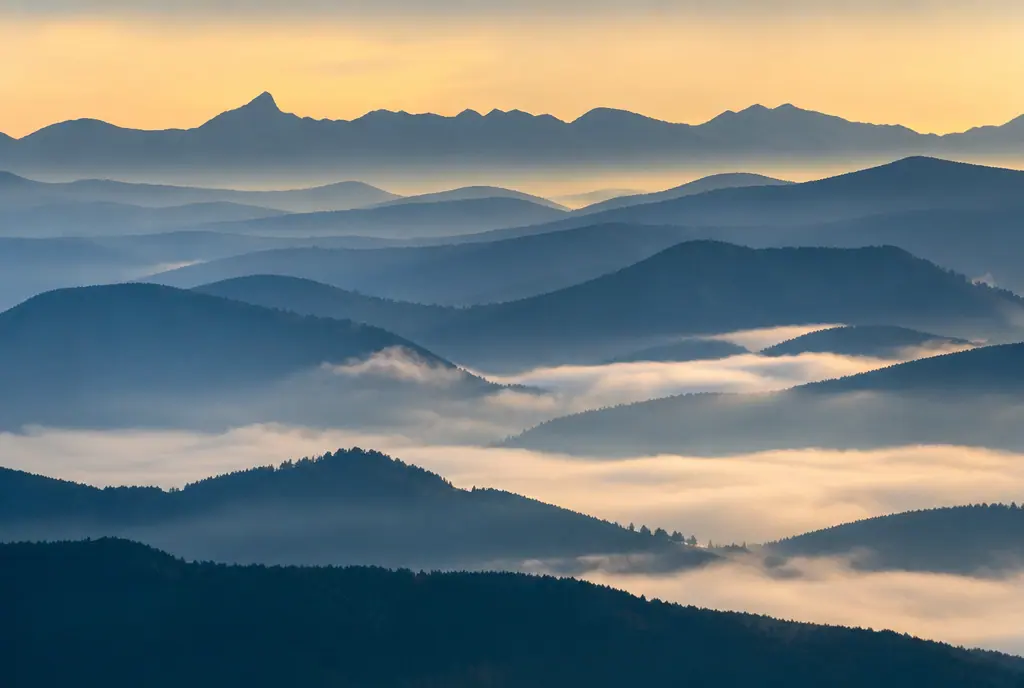
Layered ridgelines are a depth illusion, and the thing producing the depth is not the mountains. It is the air between them.
What the prompt fixes
Strong atmospheric perspective is the instruction that makes this work. It tells the model to lighten and desaturate each successive ridge, which is what separates the layers; without it you get one mountain range in a uniform colour.
Telephoto compression stacks those layers close together, which is why the image reads as graphic bands rather than as a vista — a wide angle on the same subject gives you a lot of empty sky. Low fog filling the valleys gives the atmosphere something to sit in.
The negative prompt removes harsh contrast, which would destroy the separation, along with the buildings and people that would break the scale.
Changing it
{{time}} and {{palette}} should move together. Dawn with cold blue and pale gold is the classic version; a late afternoon in warm amber and deep violet is a different photograph built from the same structure.
{{terrain}} need not be mountains — dune fields, forested hills and coastal headlands all layer the same way. What should not change is the compression. It is the whole shot.
Misty Ridge Dawn
Layered mountains with deep atmospheric perspective
Stacked ridgelines separated by fog. The whole effect rests on atmospheric perspective, so keep the light cold and the compression long.
Customize
Your prompt
183 charactersharsh contrast, lens flare, people, buildings, watermark