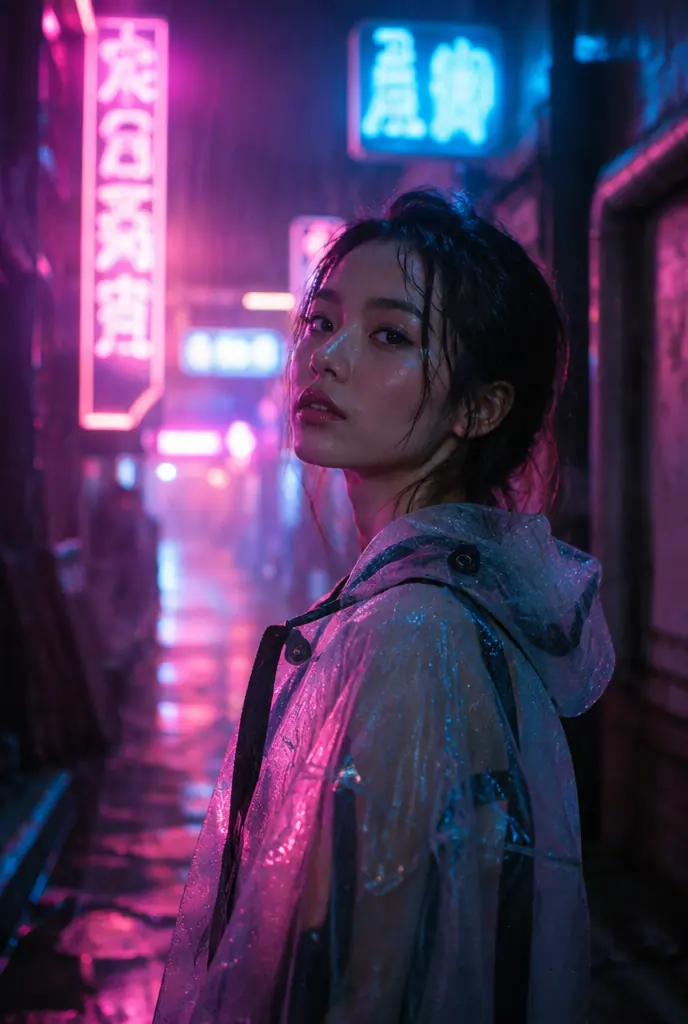
A night portrait lit by signage is the most reproducible cinematic look there is, because the light source is inside the frame and the prompt can describe it directly.
What the prompt fixes
Practical signage as the key light is the core idea. Practicals are lights visible in shot, and naming them means the colour on the subject's face has a reason to be there.
Rain-slicked doubles the light by putting a reflection under everything, which is why wet streets are a night-photography cliché and also why they work. Volumetric haze gives the beams something to travel through, and subtle film grain covers the plasticity that photoreal portraits drift toward.
The negative prompt targets distorted hands and oversaturation — the two things that give away a generated night portrait fastest.
Changing it
{{neon_color}} sets the entire palette. Complementary pairs such as magenta and cyan hold up best, because they separate the subject from the background without any other help.
{{lens}} changes the relationship more than it looks: 85mm is a flattering portrait compression, while 35mm puts the alley back in the frame and makes it an environmental portrait. Describe {{subject}} by material and silhouette — a translucent jacket catches practicals in a way a wool coat does not.
Neon Alley Rain Portrait
Cinematic night portrait with practical neon
A wet-street night portrait built around practical signage as the key light. The haze and falloff do the work, so it holds up at any focal length.
Customize
Who is in frame, and what they are wearing
Your prompt
227 charactersblurry, distorted hands, watermark, text, oversaturated