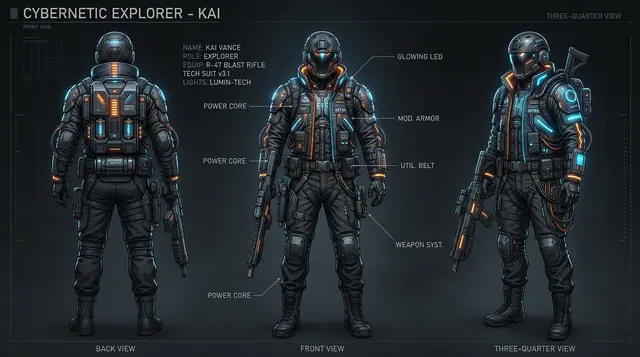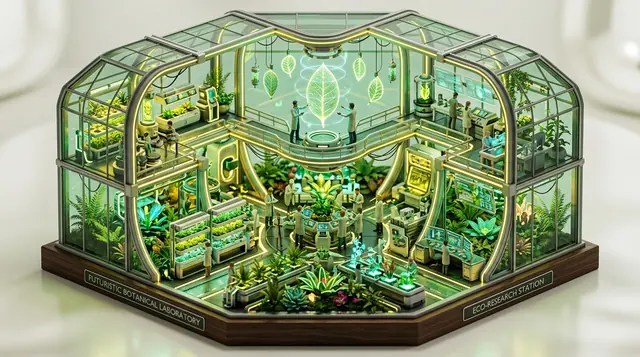
Most prompt collections are lists of text nobody has run twice. They read well, they produce something plausible once, and then they drift — because the prompt described a result rather than the conditions that produce it.
The difference between a look and a setup
"Moody food photography" is a result. A model asked for it will pick a lighting setup for you, and it will pick a different one every time.
Single soft window light from the left, deep shadows, no fill is a setup. There is nothing left to choose, so there is nothing left to drift.
Describes a result
Hyper realistic cyberpunk street at night,
neon lights, 8k, trending on artstation,
masterpiece- Buzzwords that dilute the latent space
- No camera, no optics, no light source
- Fifteen re-rolls before one usable frame
Describes a setup
Cinematic 35mm anamorphic wide shot of
{{location}}, rain-slicked asphalt reflecting
cyan neon signage, low-angle tracking,
shallow DOF, Cooke optics, Kodak 500T grain- Exact optics and film stock, stated
- One variable left open, on purpose
- Reproduces on run number one
What to state
In order of how much they matter
The light
How many sources, how hard, and from where. One named source beats any adjective you can reach for.
The optics
Focal length changes the relationship between subject and background more than any styling instruction will. 85mm and 35mm are different photographs of the same scene.
The surface
On anything reflective — glass, metal, wet asphalt — the surface is the image. Name it before you name the subject.
What to exclude
A negative prompt naming the specific failure is worth more than three more adjectives. Blown highlights, distorted hands, HDR halos.
The test
Run your prompt three times. If the three outputs differ in ways you did not choose, the prompt is underspecified.
If you cannot predict what changes between runs, you have not written a prompt. You have written a wish.
Does this apply to video prompts too?
More so. A video prompt has every variable a still has, plus duration, camera motion and continuity — and a loop that drifts is visible on every repeat rather than once.